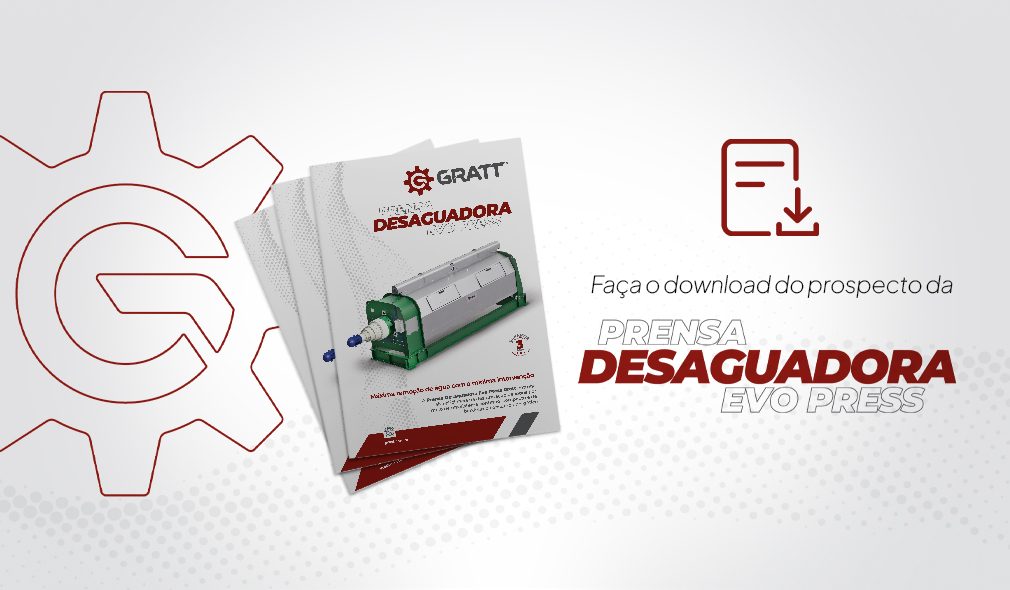
Maximum water removal with minimum intervention!
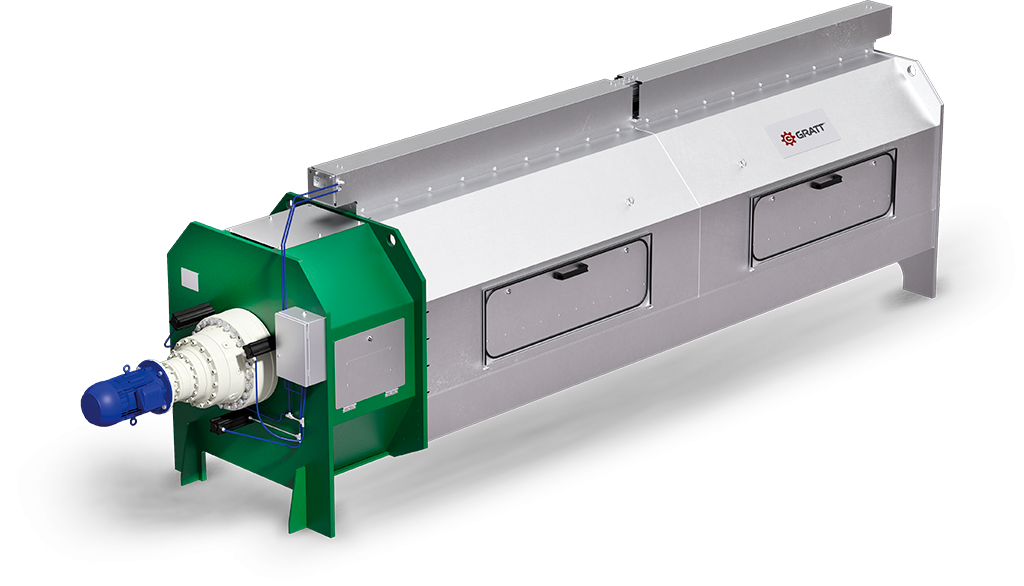
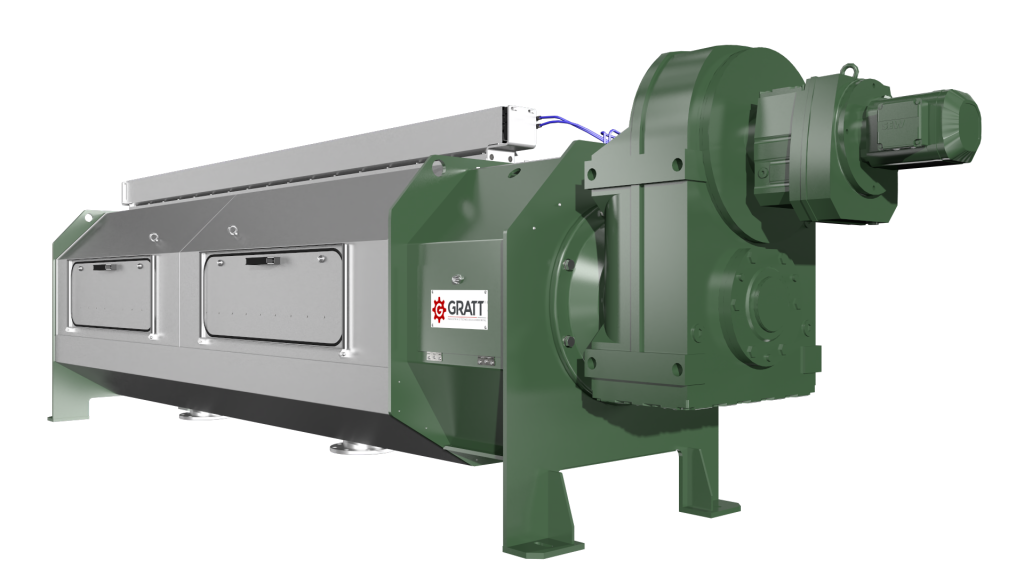
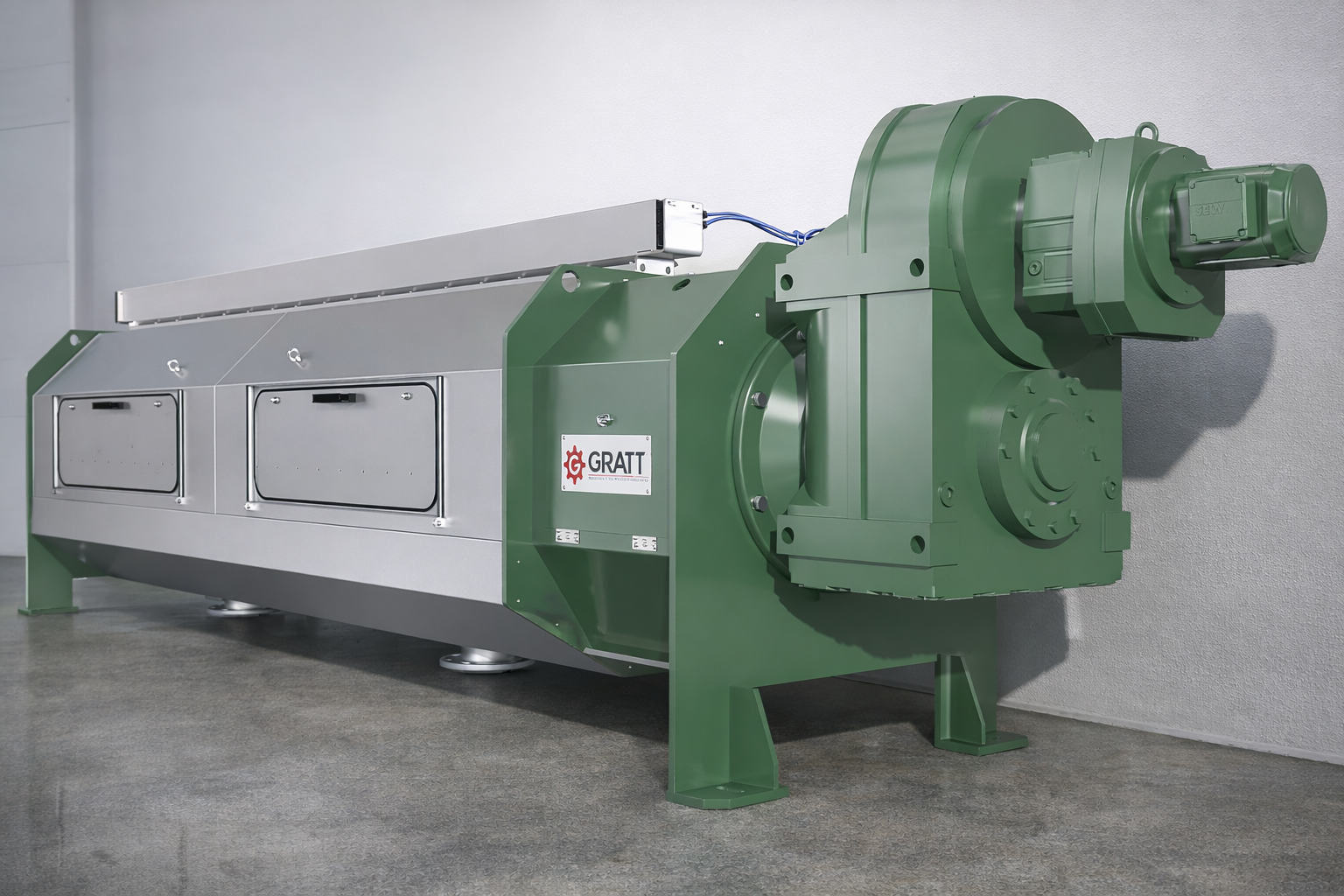
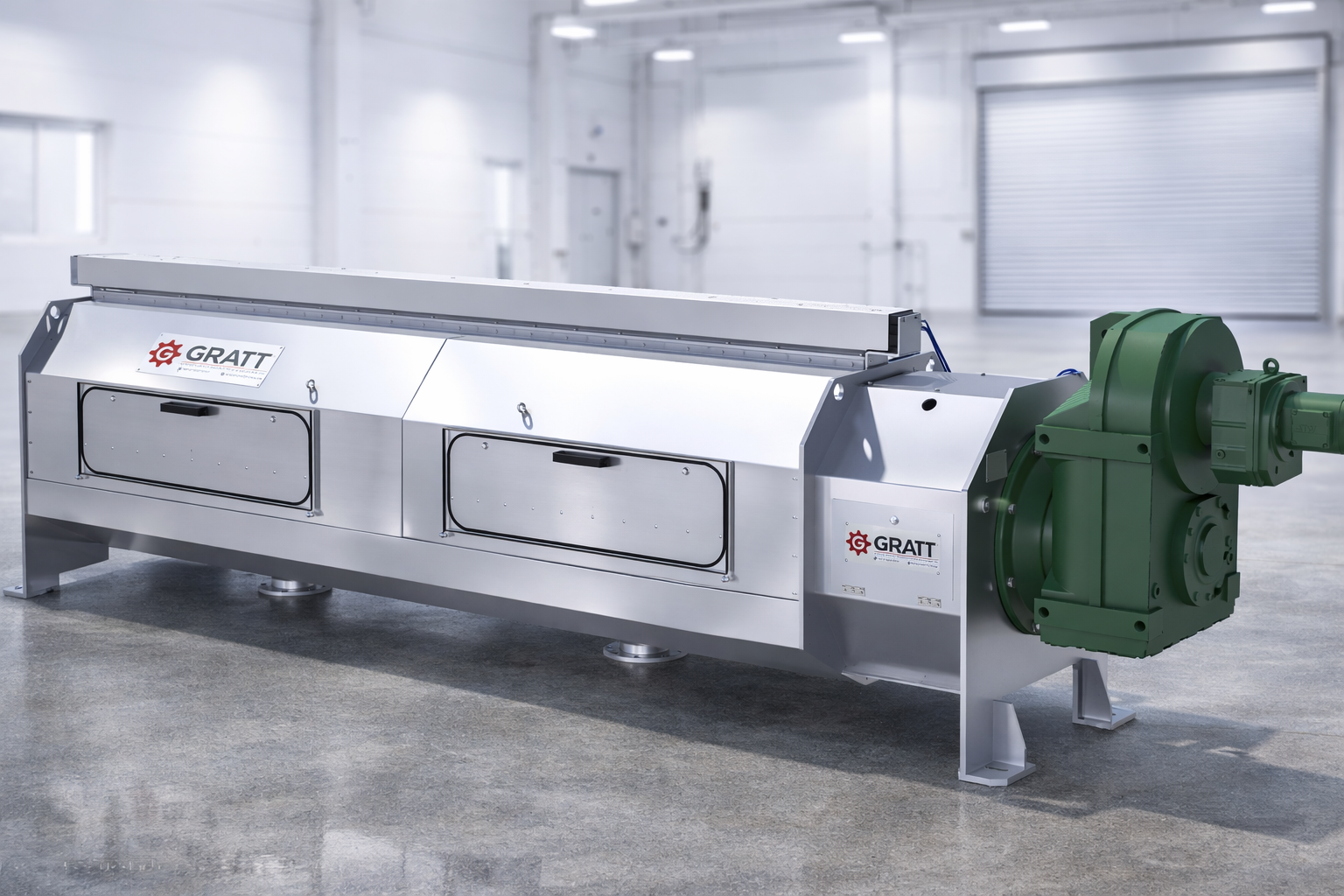
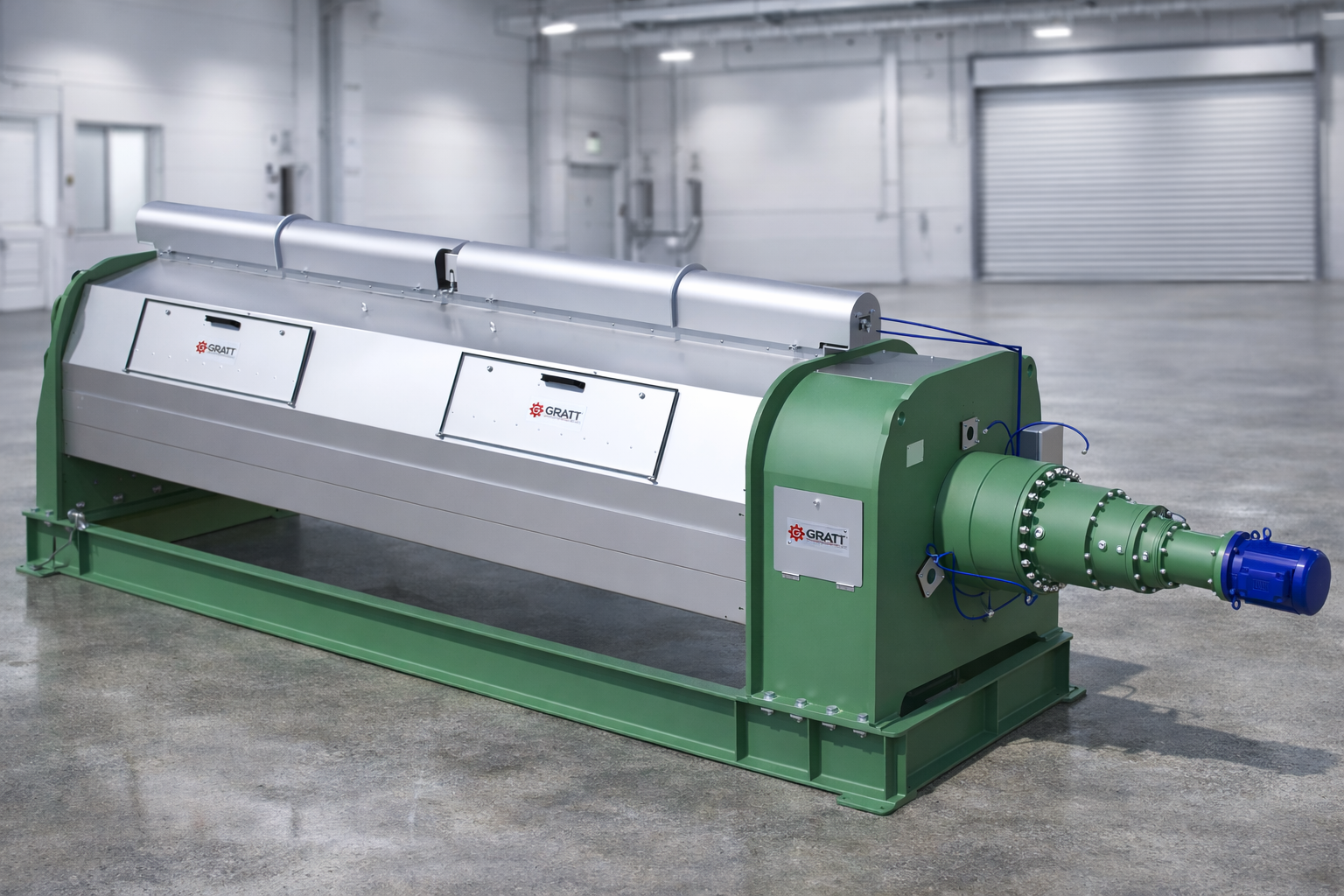
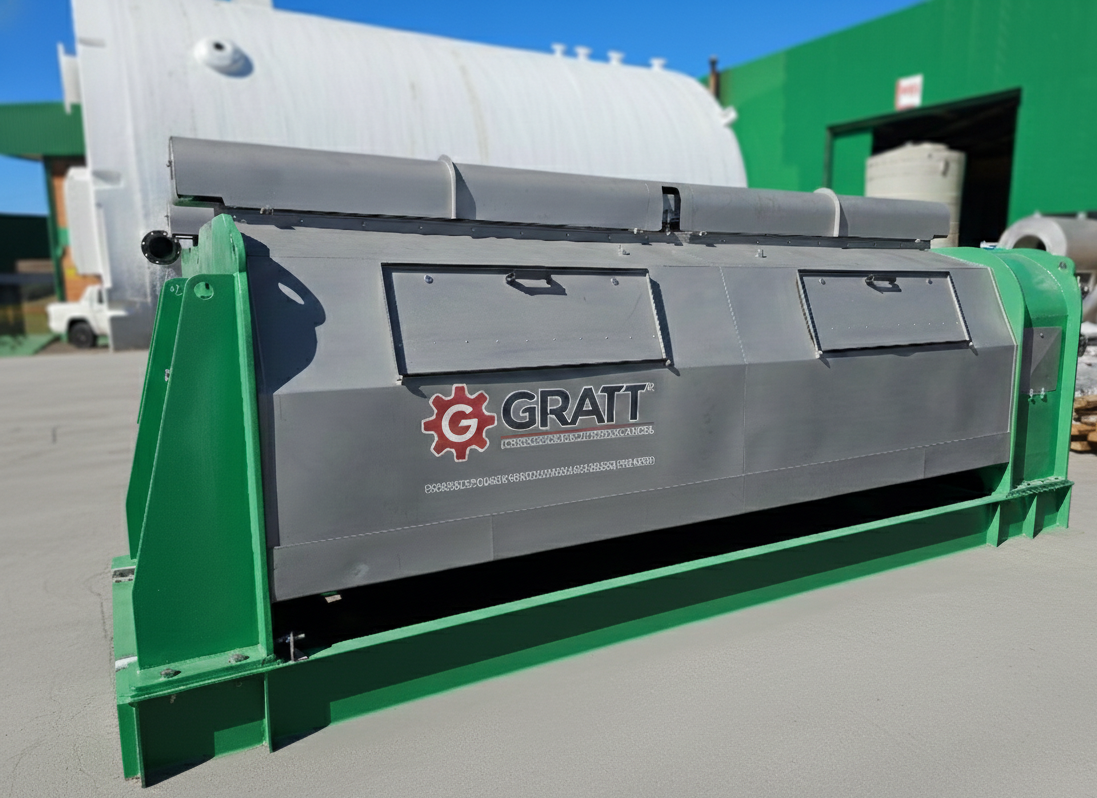
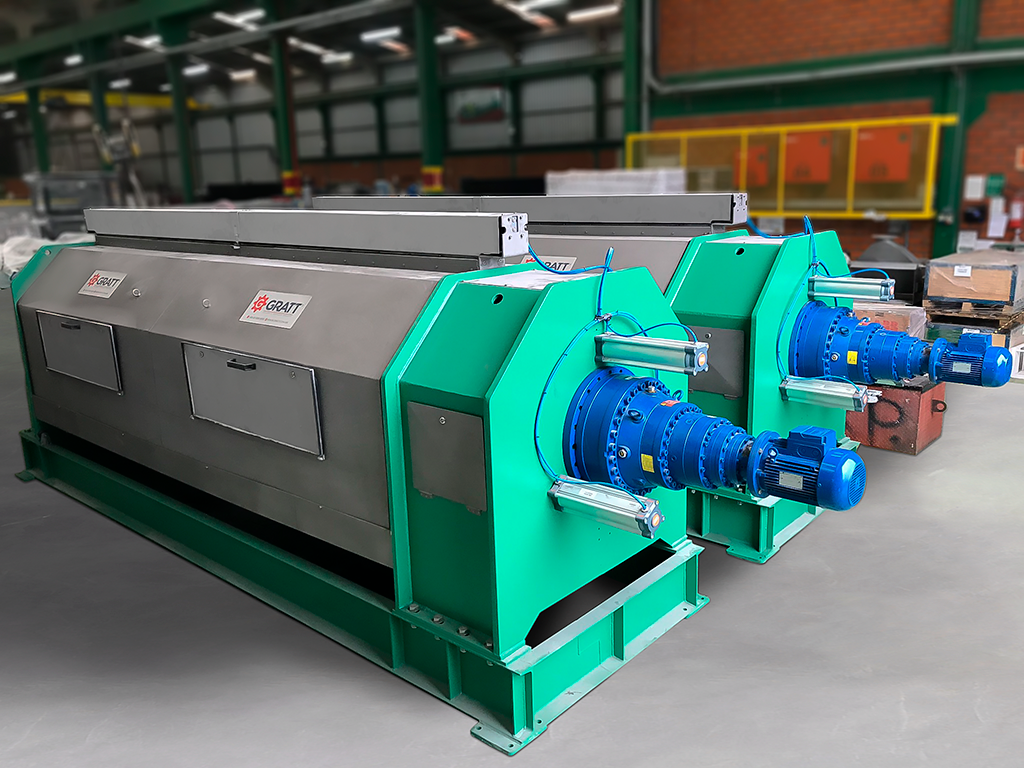
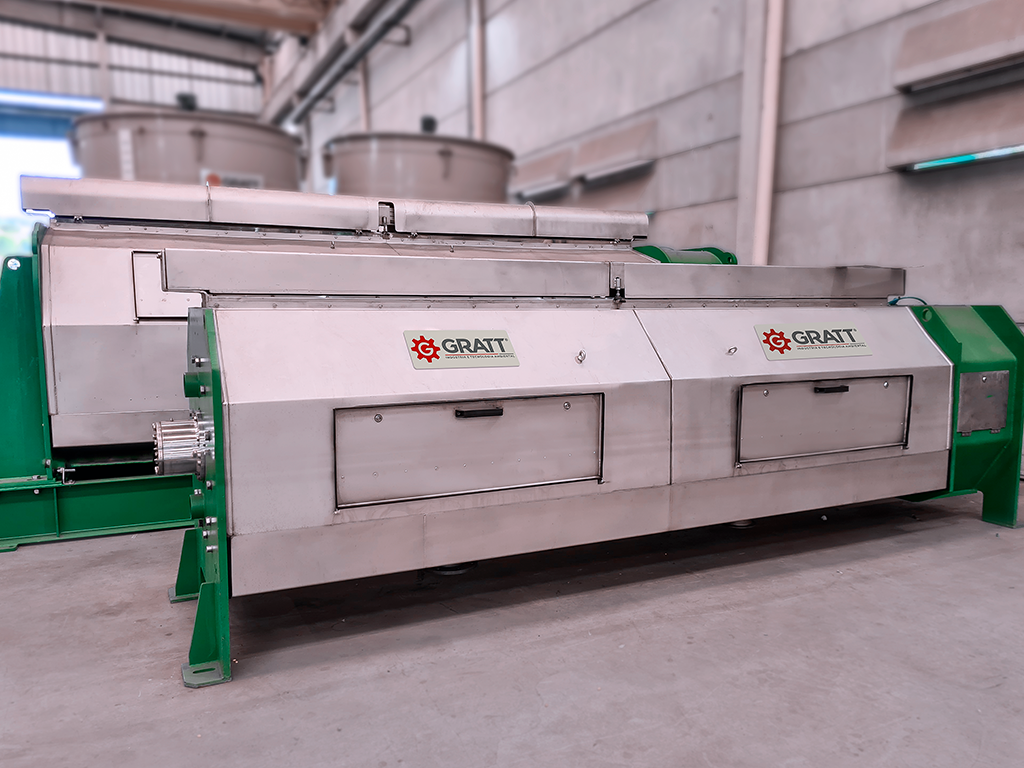
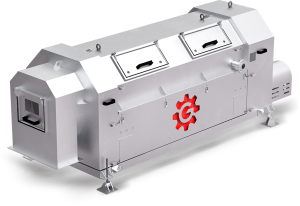
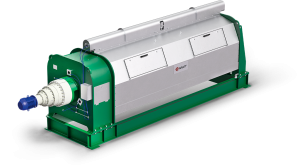
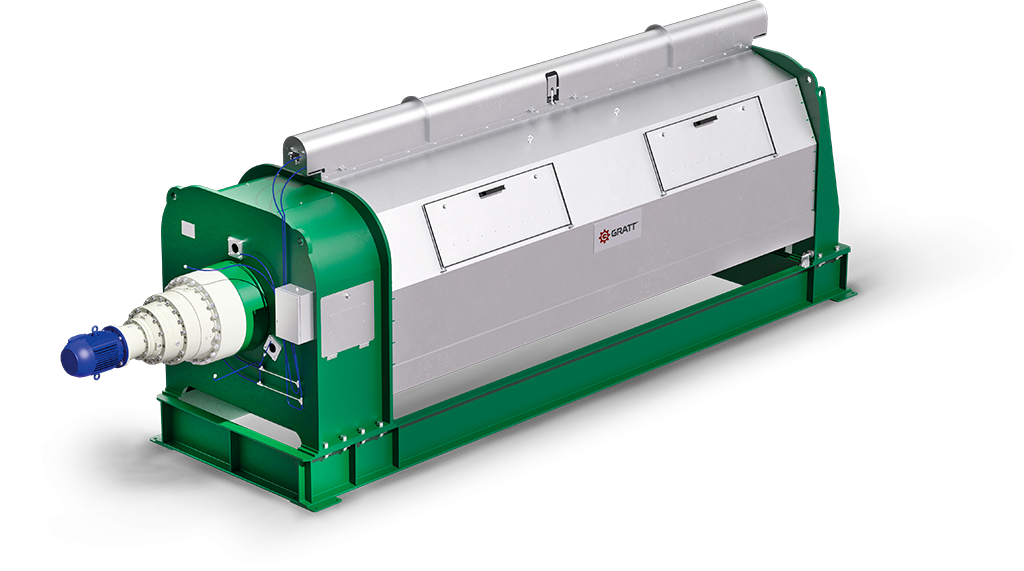
The EVO PRESS Gratt dewatering press delivers high efficiency in sludge dewatering through a continuous, compact system with very low energy consumption.
The EVO PRESS dewatering press performs drainage, densification and dehydration of sludge in a single compact unit, promoting solid-liquid separation with low operating costs. Developed based on GRATT's experience in effluent treatment, it operates continuously and automatically, reducing waste volumes and facilitating transport and final disposal.
How does it work?
The flocculated sludge is fed continuously into the drum, where the conveyor screw promotes its progressive displacement. Separation occurs by a combination of gravitational drainage and mechanical compression. The clarified water passes through the screen, while the solid is conveyed to the final outlet already dehydrated.
Process stages
Stage 01 – Draining: initial removal of the liquid fraction with greater screen spacing.
Stage 02 – Densification: light and progressive compression concentrating the solids.
Stage 03 – Dehydration: application of high pressure through the counterpressure cone, forming cake with a higher solids content.
Advantages of the Gratt Screw Press
Differences
- Wear protection;
- Greater energy efficiency;
- Automatic hygiene;
- Lower consumption of water and chemicals;
- Continuous operation 24 hours a day;
- Low noise level;
- Low maintenance;
- Compact structure.
Applications
Recommended for ETA and ETE sludge, physical-chemical and biological processes, food industries, refrigerators, paper and cellulose, dairy, textiles, chemicals, recycling, pharmaceuticals, condominiums and other wastewater treatment systems.
Operational Advantages
- Significant reduction in sludge volume;
- Lower transportation and final disposal costs;
- Continuous operation;
- Low energy consumption;
- Little operator intervention;
- Smaller footprint.
Sanitization system
Mobile washing ring with spray nozzles and scrapers keeps the drum clean internally and externally, preserving the permeability of the filter element, reducing water consumption and preventing clogging.
Automation and control
Fully automatic operation by PLC, with sludge pressure control and rotation adjustment by frequency inverter, maintaining constant performance even with variations in input concentration. May include automatic polymer preparation system and overflow devices.