DECANTER

Efficient clarification with maximum operational stability!

Gratt Decanters deliver maximum efficiency in the separation of solids, through a controlled gravitational process.

Decanters are equipment that remove settleable solid particles by the action of gravity. With greater density, solid particles settle at the bottom and are removed, while clarified water flows through the spillway.

How does it work?

GRATT DECANTERS – Operational safety, efficiency and durability for critical sedimentation stages.

Decantation removes settleable solid particles that are present in the water by the action of gravity. Naturally, solid particles with densities greater than water tend to follow the bottom flow of the decanter. These solids settle at the bottom of the decanter where they are removed, and the clarified material is removed through the spillway.

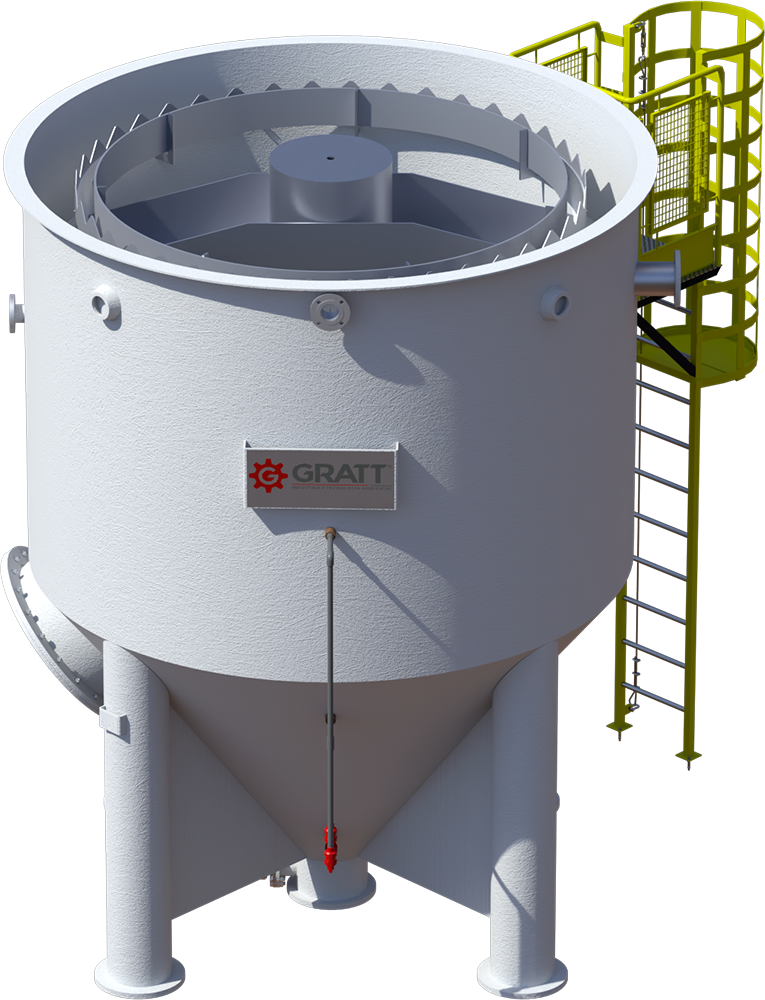
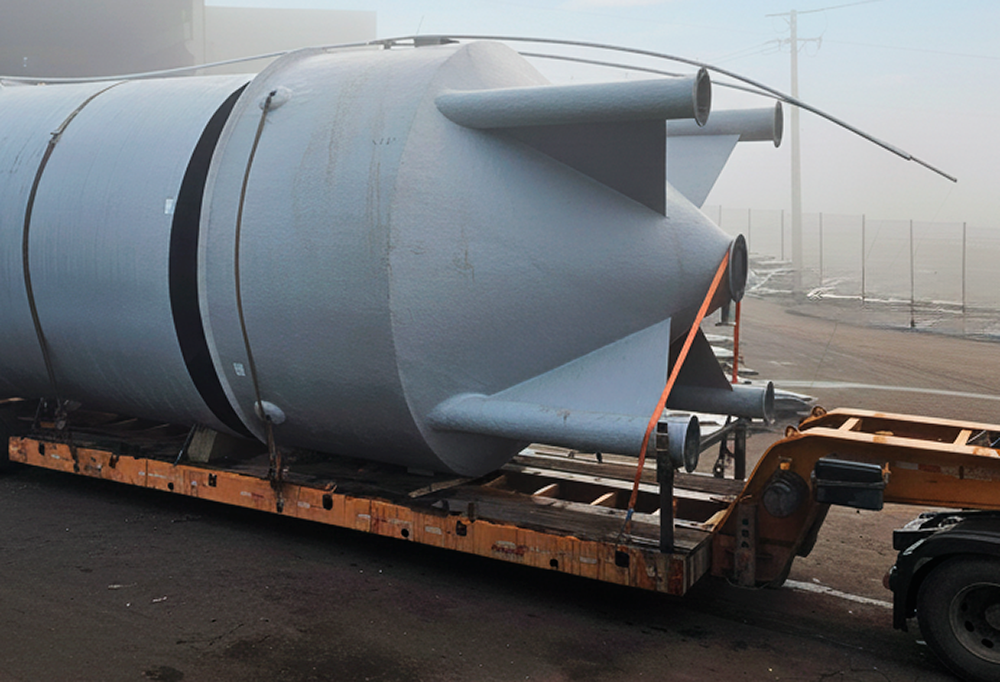
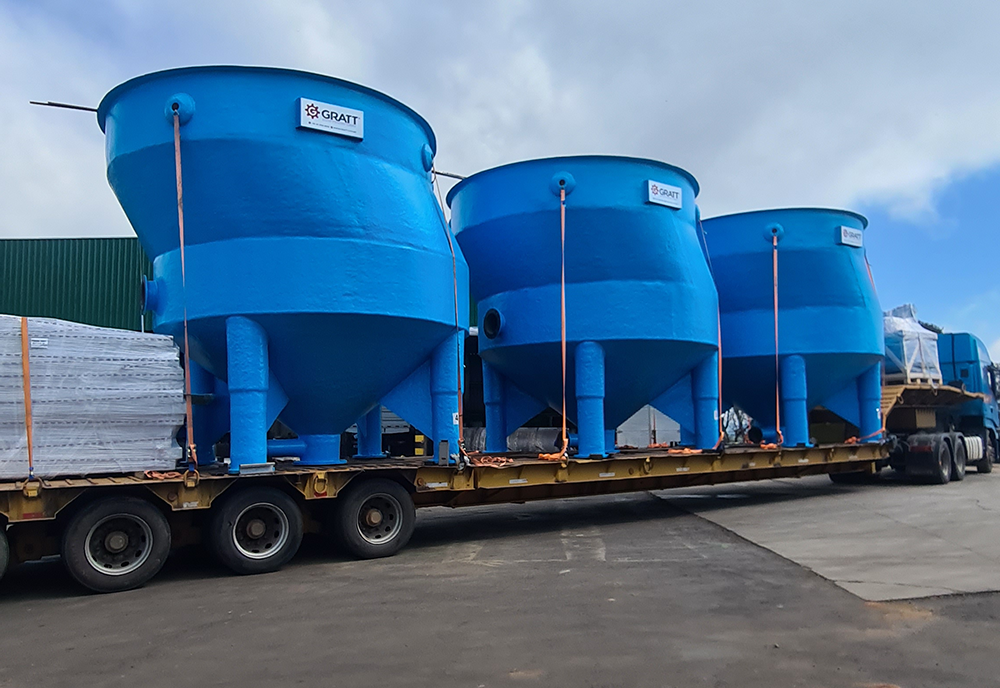
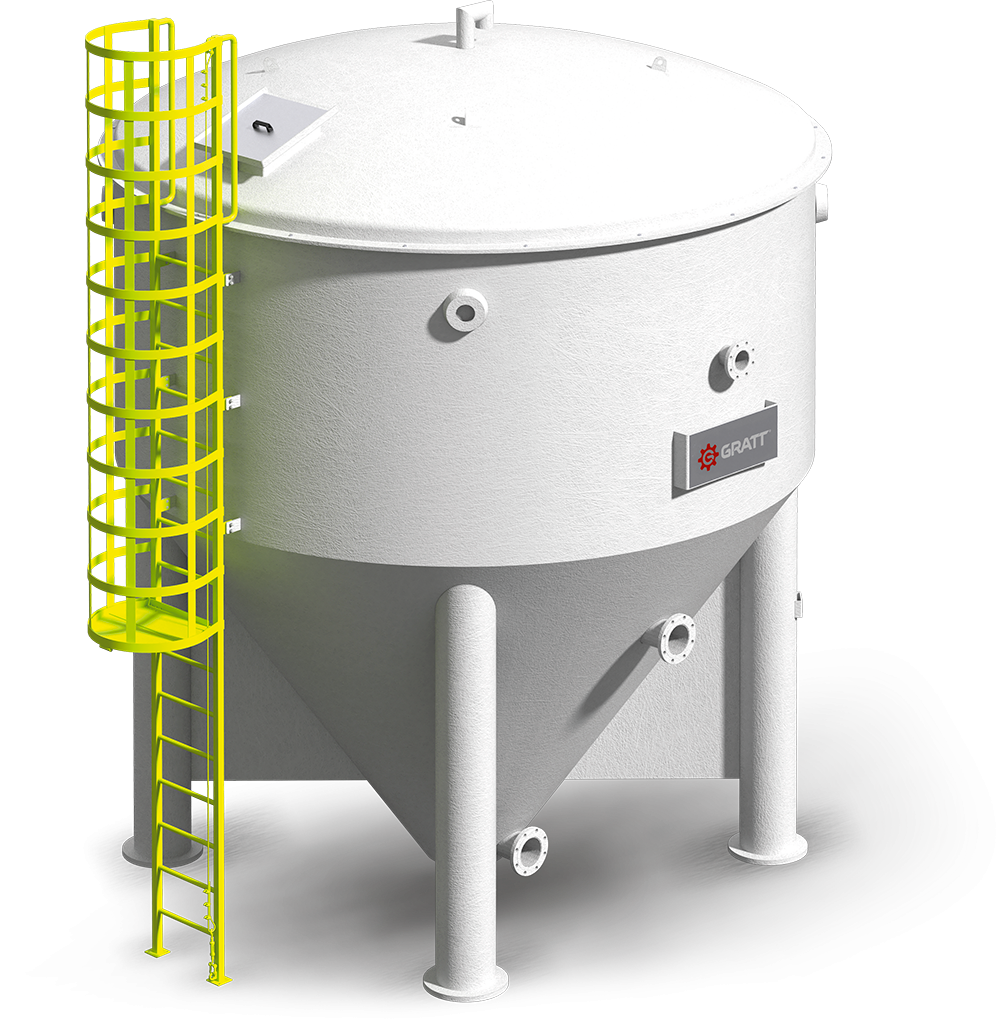
GRATT GRP DECANTER

Advantages of Gratt Decanters

Application versatility
Stainless steel, carbon or FRP
Operational stability
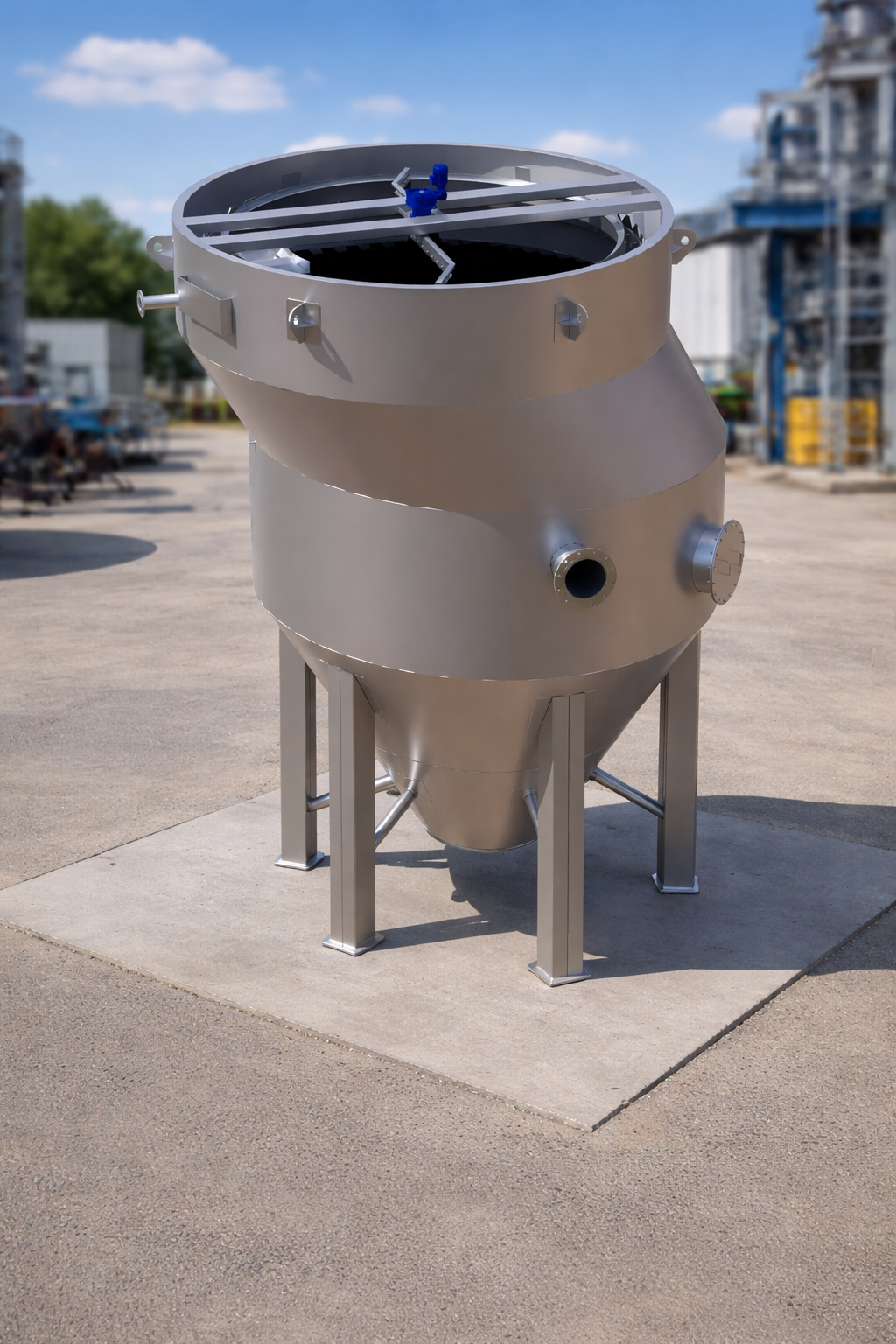
Conical bottom
Maximum efficiency
Minimal maintenance
Controlled gravitational process
Operation safety
High durability

Construction

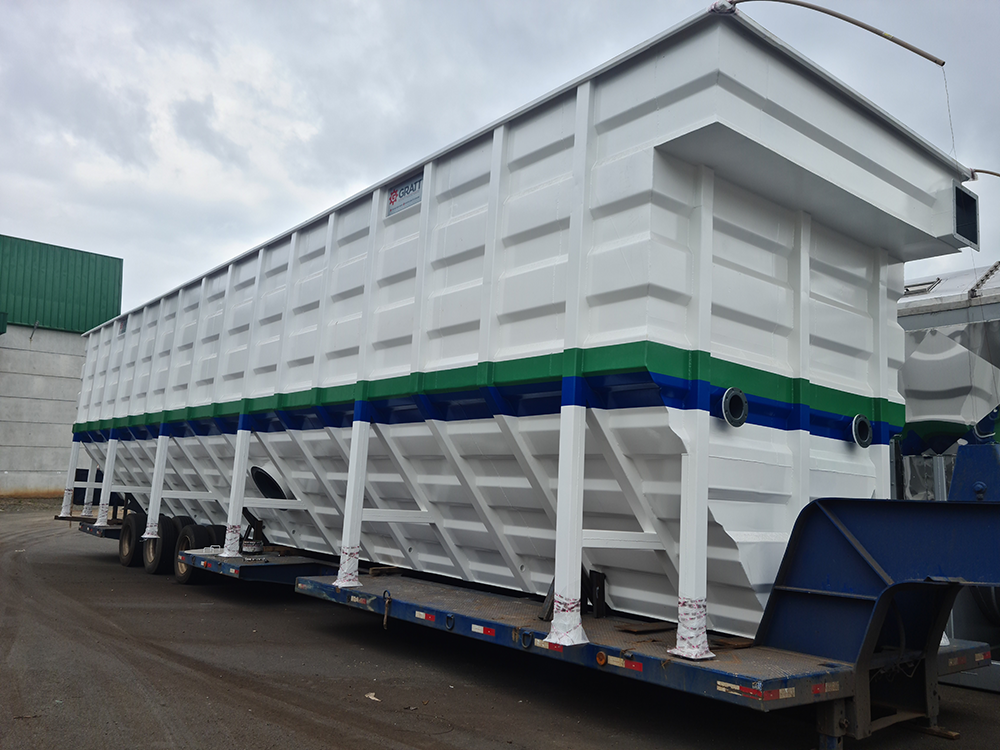
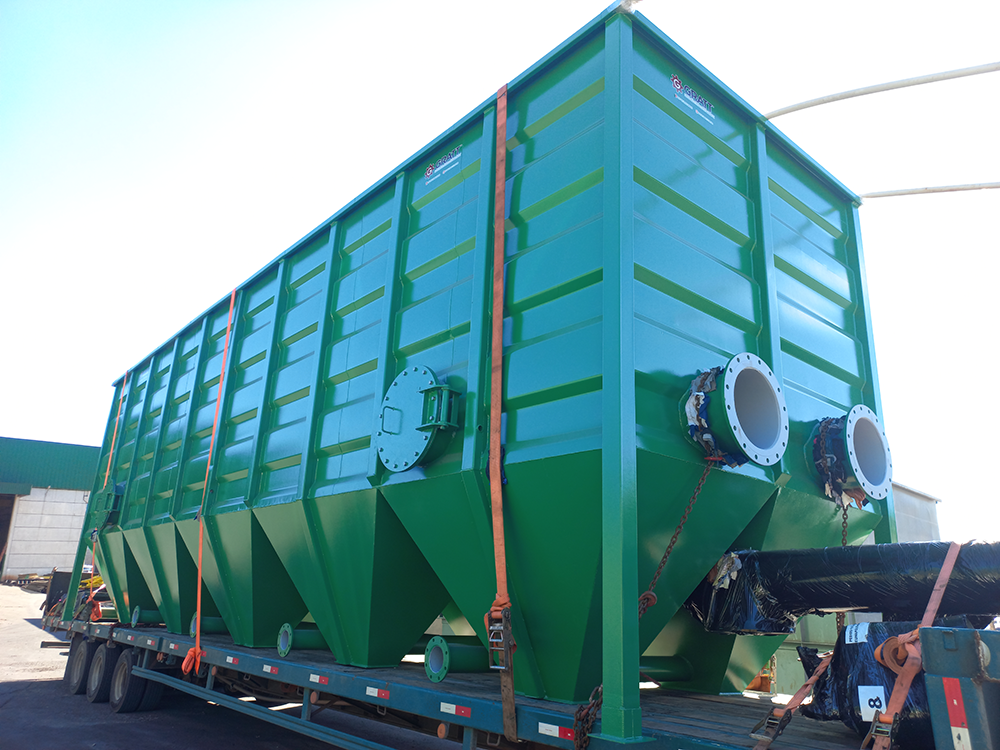
Built in different formats, it can be manufactured in GRP (Glass Fiber Reinforced Plastic), stainless steel or carbon steel, depending on the chosen application.

The construction is based on self-supporting metallic structures, sized in accordance with national and international technical standards, with structural reinforcements calculated to withstand static and dynamic loads and permanent hydrostatic efforts.

Tanks can be manufactured from carbon steel with high chemical resistance epoxy paint, stainless steel or thermoplastic and composite materials, depending on the aggressiveness of the fluid, operating temperature and process durability requirements. Internally, they receive anti-corrosive coatings or anti-cavitational protection, ensuring prolonged useful life even in harsh environments.

Applications

The vast majority of decanters can be used in water treatment plants and in the treatment process of industrial or sanitary effluents, in some stages it will also be found in the primary treatment and secondary treatment of effluents.

  • water treatment
  • Stormwater treatment
  • Reuse water treatment
  • Biological treatment
  • Physicochemical treatment

Gratt Decanters Models

There are different models and types of decanters manufactured in the most diverse materials and dimensions, what will determine the ideal model for each customer will be its functionality in relation to the liquid it will treat, and the model can vary according to the amount of solids, density, speed, available space, flow rate, etc.

Due to this, for each application of the decanter, all the characteristics of the effluent and the customer's needs must be studied. The project specifies the model and application rate that will be used so that the process achieves the expected result and performance.

The decanter for removing suspended solids is one of the oldest physical processes and is still widely used in treatment plants.

Conventional decanters use a higher application rate in order to reduce flow speed and turbulence, promoting the deposition of particles heavier than the liquid.

The advantage of the conventional decanter is its simpler construction, being a low-cost alternative for small flows.

The Dortmund type decanter stands out from other models due to its accentuated conical bottom, its function is to promote the decantation of solids through the passage of liquid, operating at low speed. The sharp conical bottom allows for greater sludge densification.

Characteristic format of this equipment: cylindrical tanks with a sharp conical bottom, suitable for the sedimentation of suspended solids.

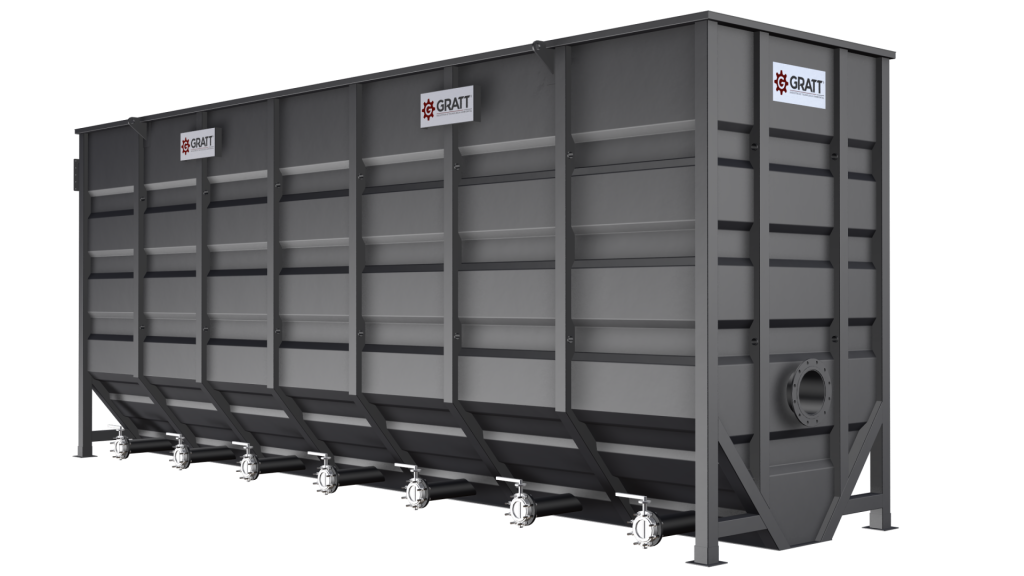
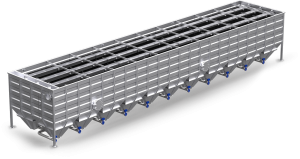
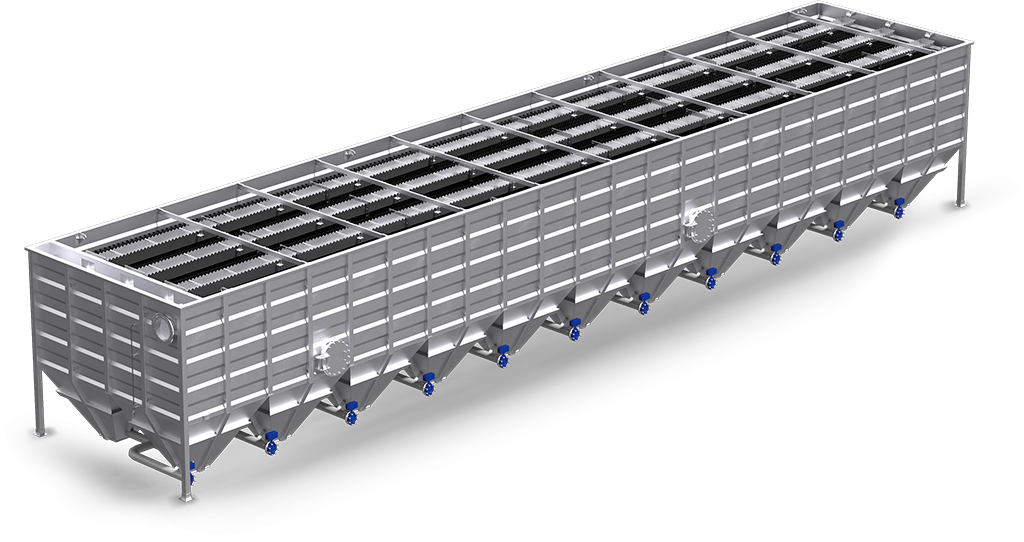
Lamellar decanters are an evolution of old decanters, and can be up to 9 times smaller than conventional systems, proportionally occupying a smaller area, with higher efficiency.

This is possible due to the set of lamellar elements throughout its interior, they increase the contact surface with the liquid and help in the formation of larger flakes so that they can be decanted.

Its main advantage is the high flow rate, reducing its physical size, providing the ability to meet larger flows; its efficiency in solid sedimentation; and low maintenance.
Gallery

Downloads

Budget

Name *
Enterprise *
Telephone *
E-mail *
City *
Message *
Privacy Policy *

BUDGET

Receive a quote tailored to your needs

FILL OUT THE FORM TO SUBSCRIBE TO THE NEWSLETTER

Name *
Enterprise *
Telephone *
E-mail *
City *
Message *
Privacy Policy *