Treatment of sanitary effluents with cutting-edge technology!
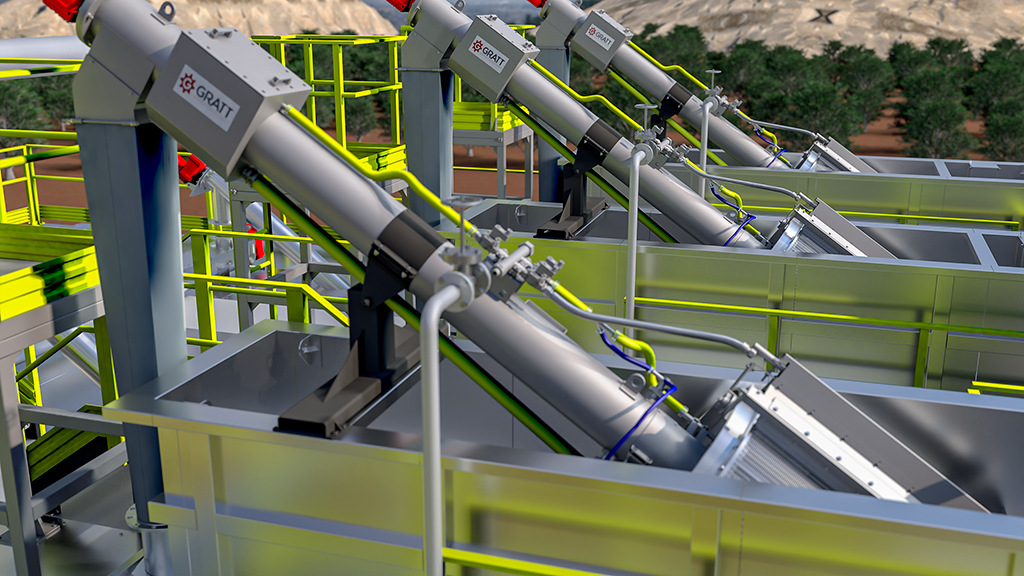
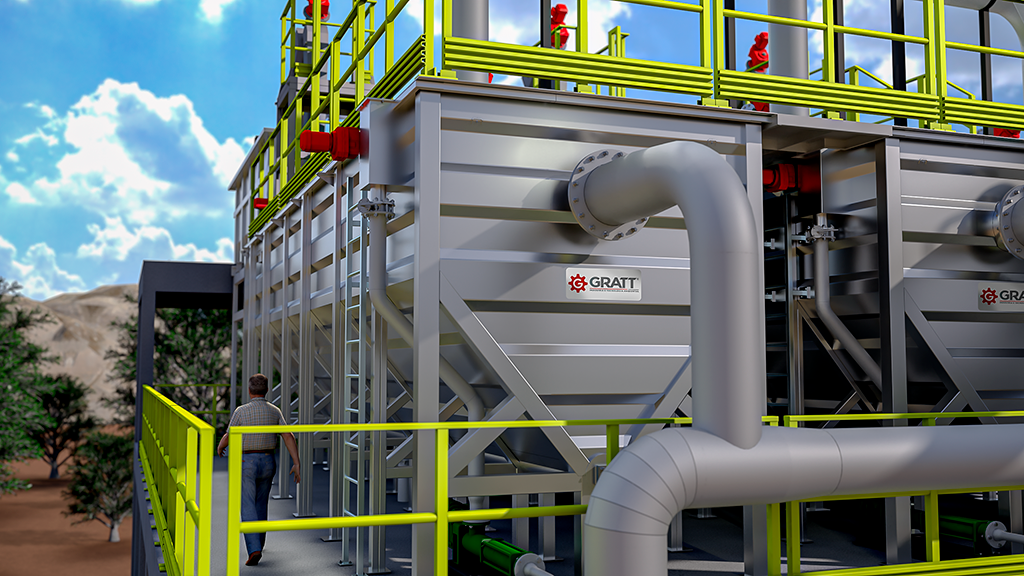
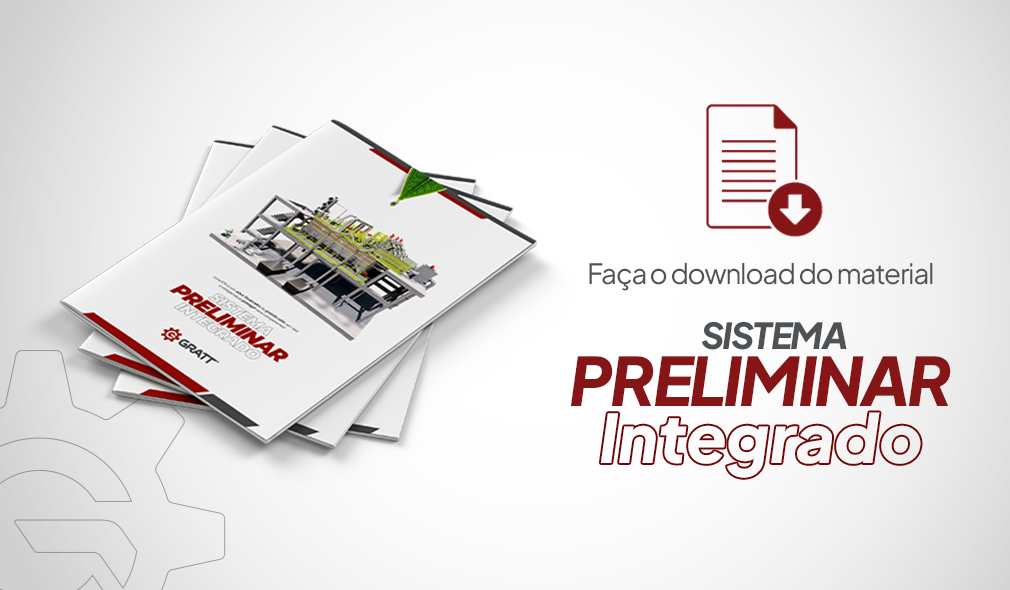
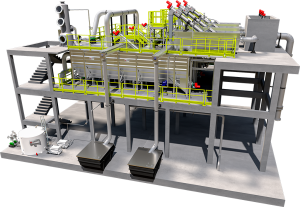
The Gratt Integrated Preliminary System is a compact and automated unit for pre-treatment of sanitary and industrial effluents.
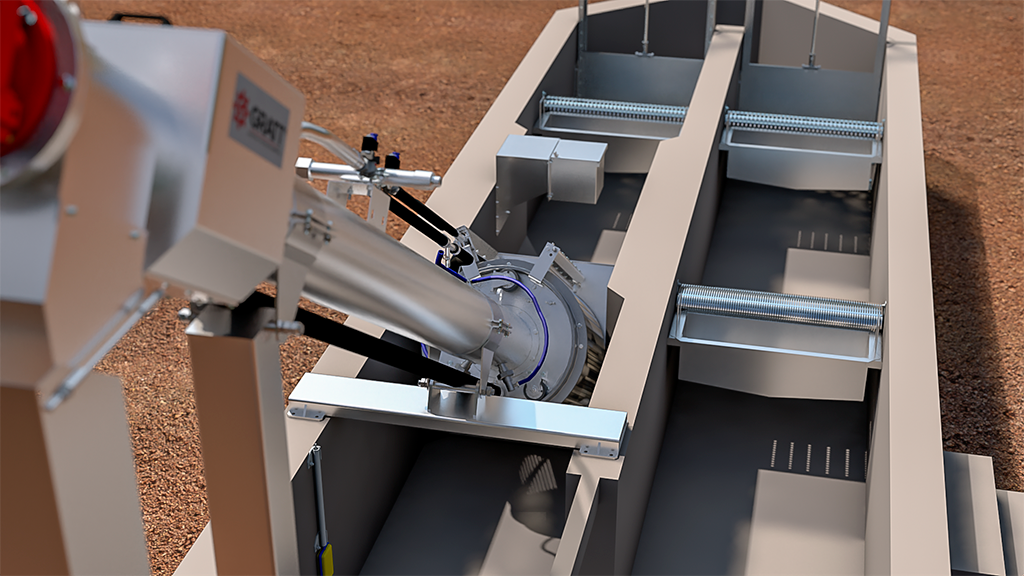
Designed to concentrate the steps of grating, fine sieving, sand removal and grease removal in a single piece of equipment, the system optimizes physical space, reduces civil works and increases the operational efficiency of the treatment plant.
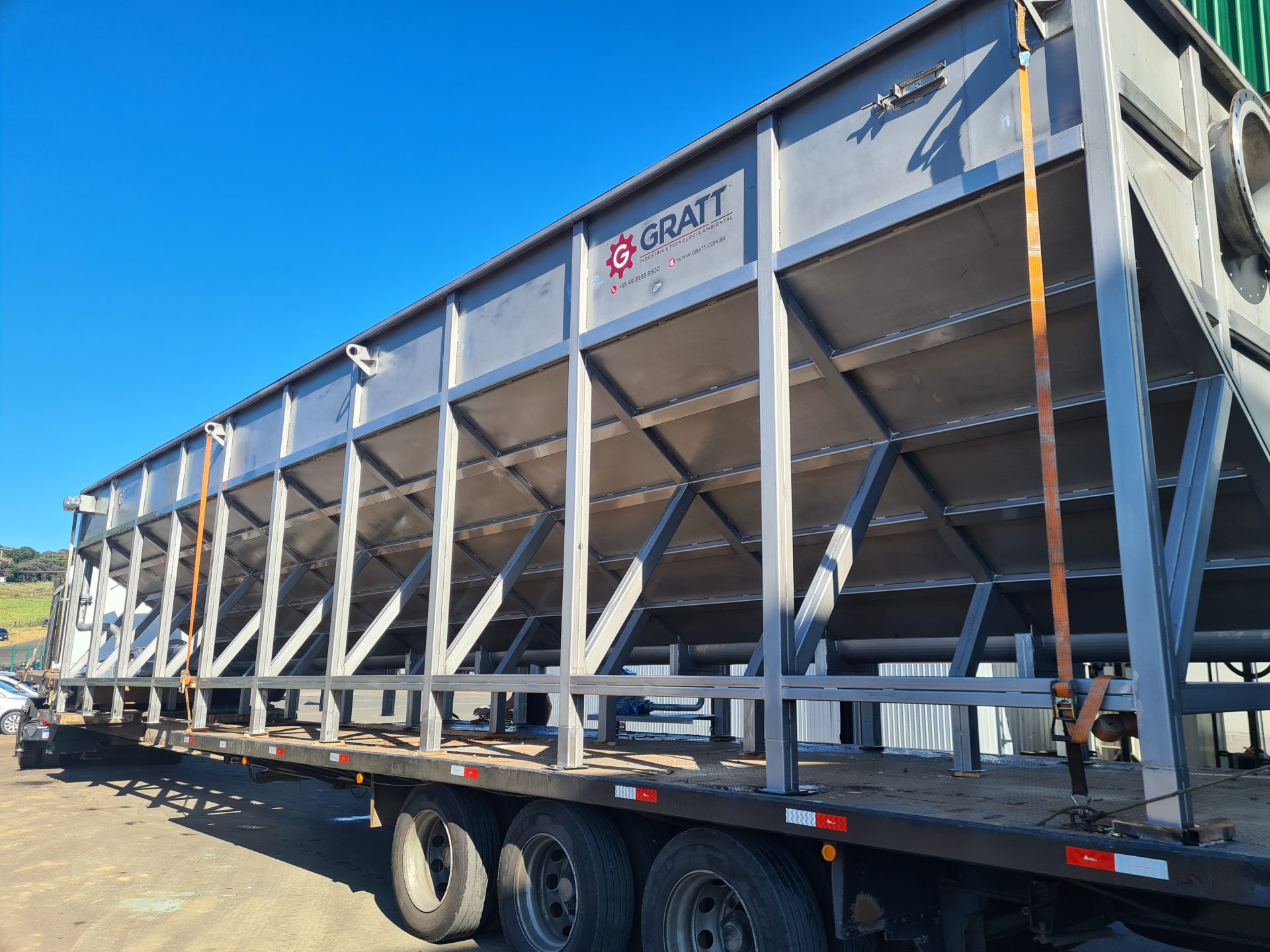
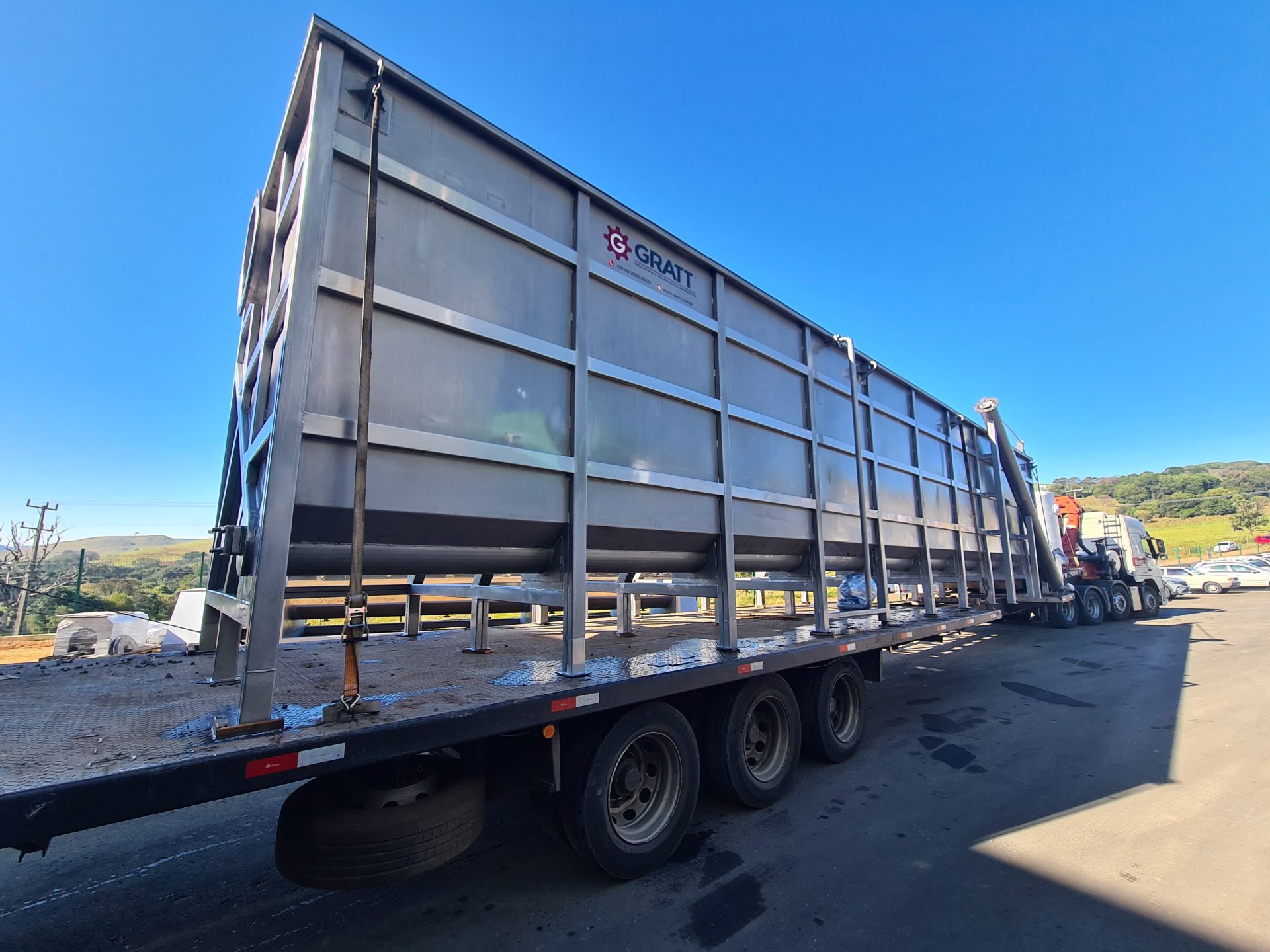
Made of stainless steel, the set offers high resistance to corrosion, long service life and continuous operation with minimal manual intervention.
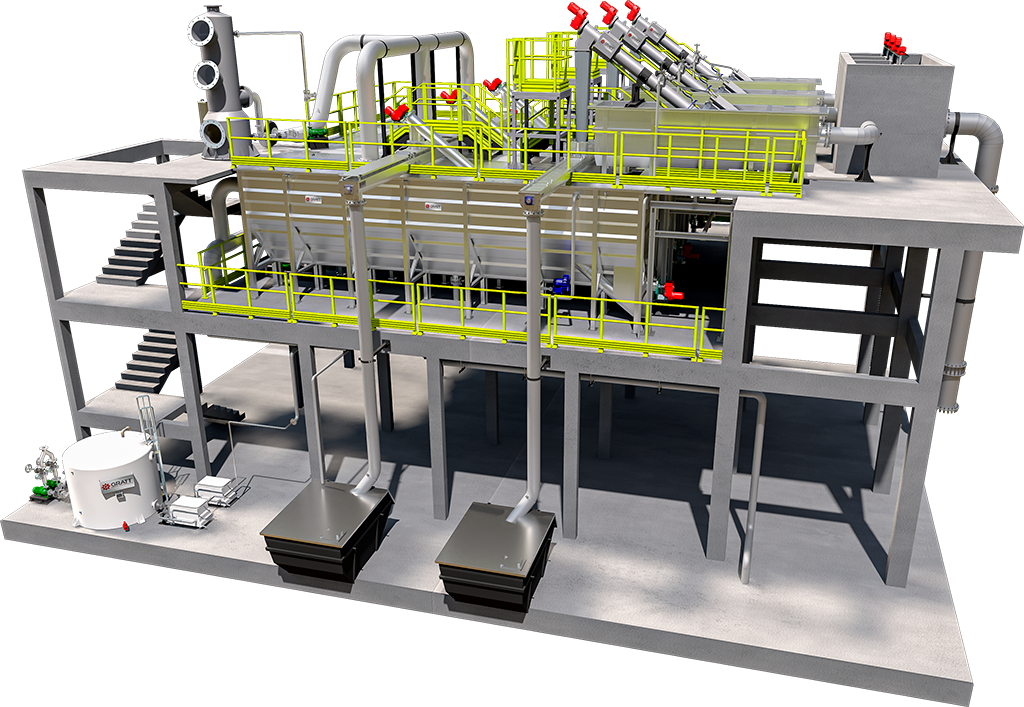
Process steps
1- Sieving and Grating
The purpose of sieves is to retain fine or coarse solids, separating them from the liquid medium. Fundamental to ensuring the proper functioning of all Station equipment, they mainly prevent clogging and obstructions of pumps and pipes in a system, in addition to reducing the maintenance of subsequent peripherals.
The effluent is fed by gravity or pumping through the inlet flange. In the first stage, fine sieving occurs using a channel sieve, with an opening variable between 0.5 mm and 10 mm, depending on the project.
At this stage the following are removed:
- floating materials;
- suspended solids;
- coarse residues.
Retained material is automatically removed, washed and compacted, reducing volume, organic load and odors. After the process, the waste is unloaded into a bag or bucket.
The liquid from washing is reintegrated into the treatment flow.
2- Sand removal (Desanding)
Desanding is a step within the effluent treatment process for situations in which sand is present. Sand is removed by decantation. The grains of sand, as they are heavier, have a natural tendency to sink to the bottom of the reservoir, and are thus removed.
It is extremely important to remove sand from the system to protect equipment following treatment. Obstructions and especially abrasion in equipment and pumps are avoided.
After sieving, the effluent goes to the channel-shaped desandering chamber with a cross section designed to favor sedimentation.
During hydraulic displacement:
- settleable mineral particles settle to the bottom;
- the accumulated sand is collected by horizontal screw conveyor.
Periodically, the system is activated to automatically discharge the sand.
The material goes to a second screw conveyor inclined at approximately 35°, where partial dehydration occurs before final disposal in a bag or bucket.
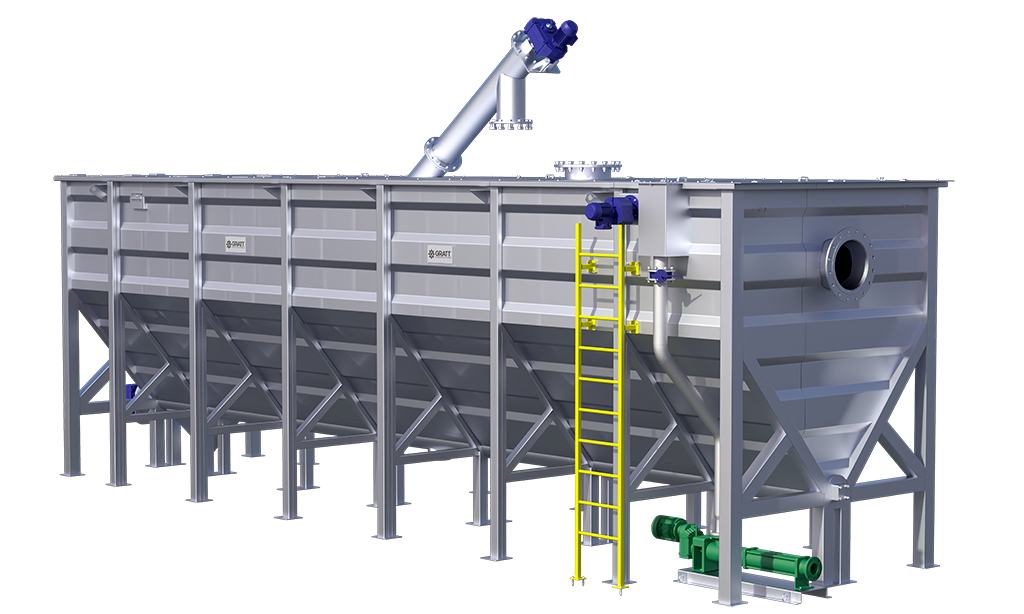
Solids transport system
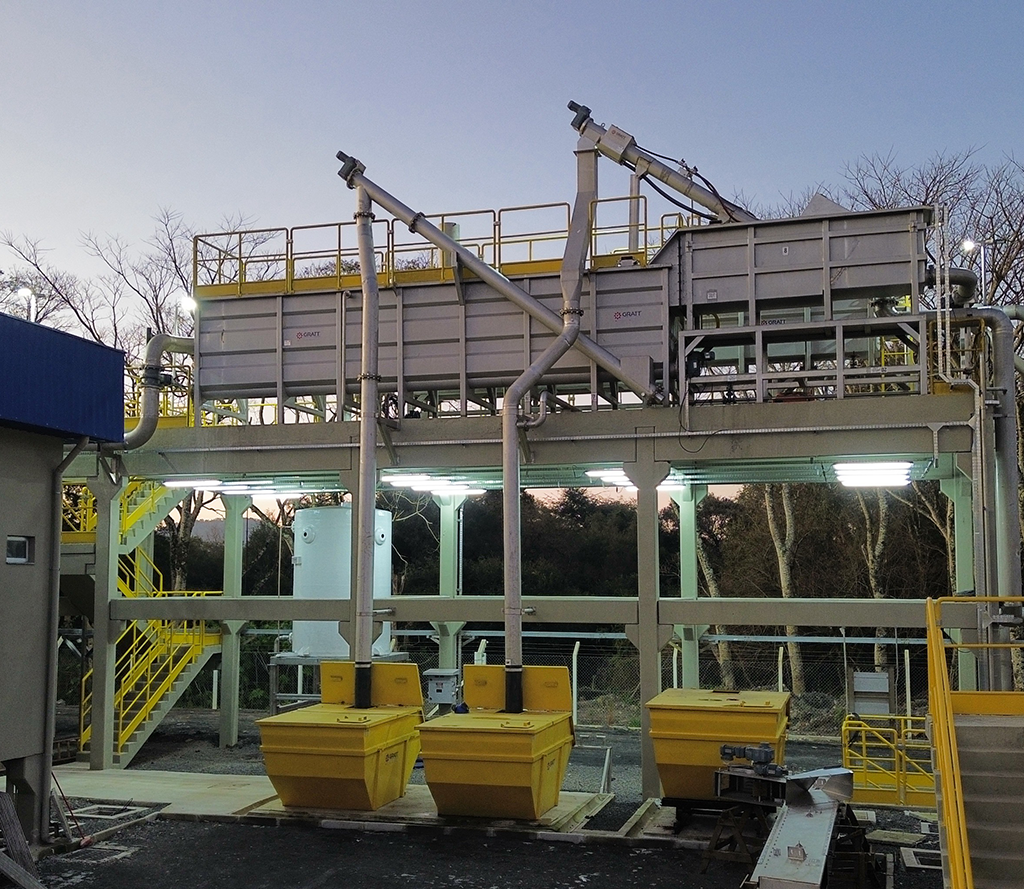
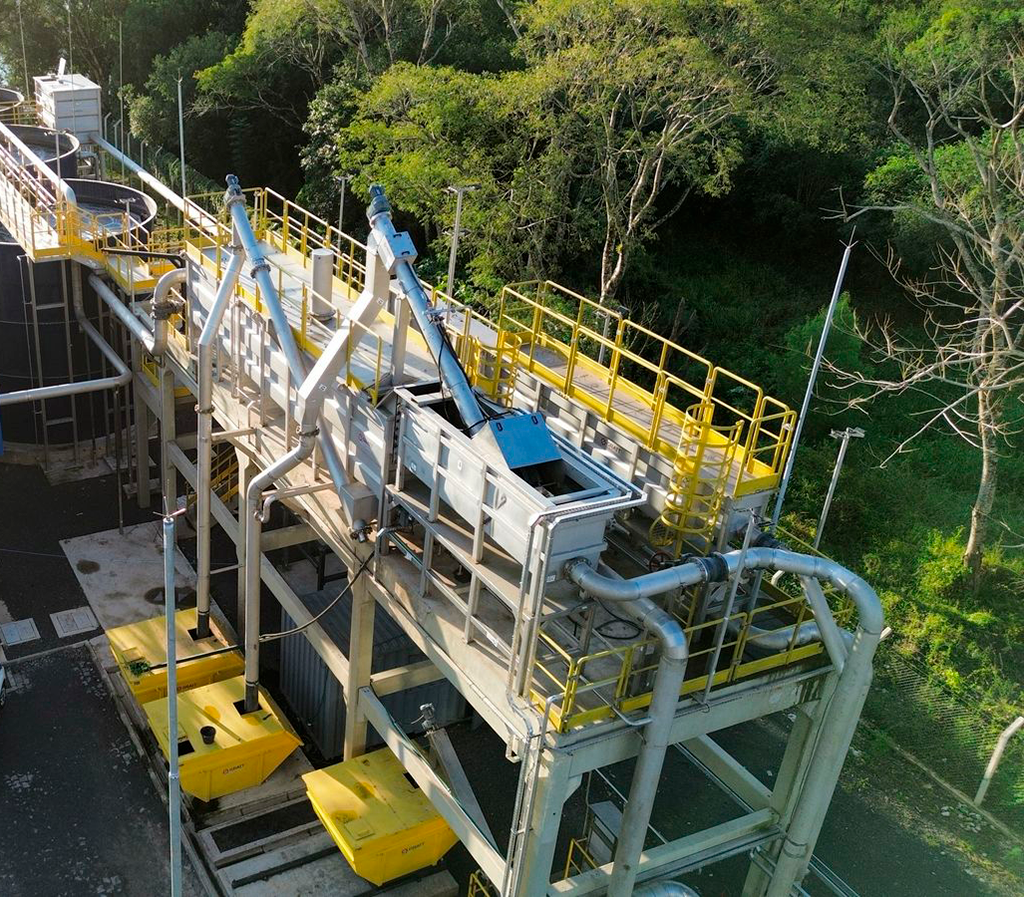
All waste removed (grate, sifted and sand) is conveyed by screw conveyors installed in closed ascending tubes.
This system:
- prevents odor dispersion;
- reduces environmental contamination;
- ensures operational security;
- facilitates final disposal.
Applications
Suitable for:
- Sewage Treatment Stations (ETE);
- Industrial Effluent Treatment Plants;
- Compact sanitation systems;
- Expansions or retrofits of existing plants.
The system can be installed:
- On the floor;
- At underground level;
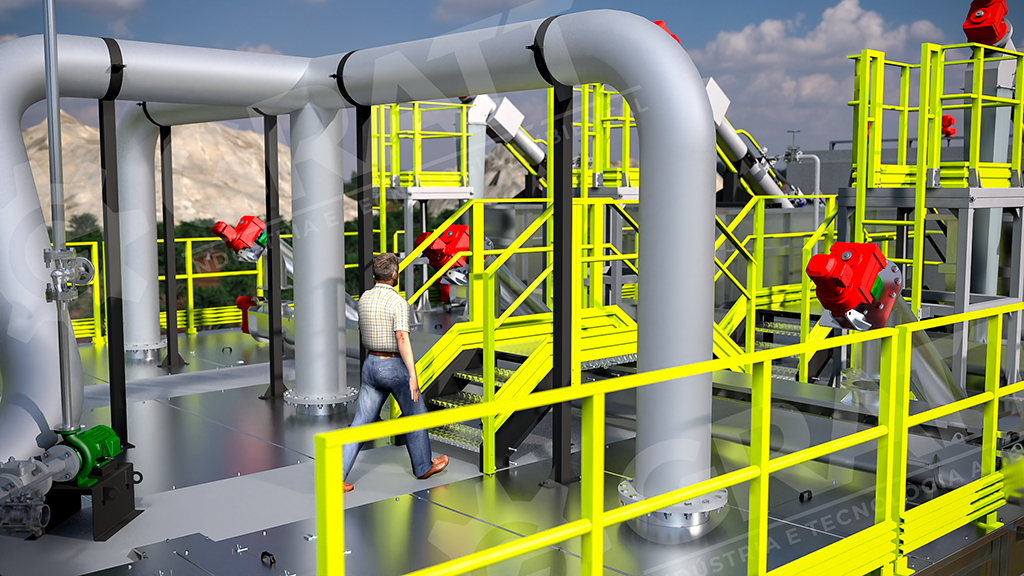
- In individual configuration or in parallel modules.
Capable of handling flows of up to 400 L/s per unit, being able to operate together for greater hydraulic demands.
System configuration
The set integrates into a single module:
- Structural metal channel;
- Belt grid (optionally rotating screen);
- Channel sieve for fine sieving;
- Channel type sand trap;
- Horizontal and inclined screw conveyors;
- Mechanical fat removal system;
- Screw conveyors in closed tubes;
- Solids washing and compaction system.
Standard manufacturing is in AISI 304 or 316L stainless steel, depending on the aggressiveness of the effluent.
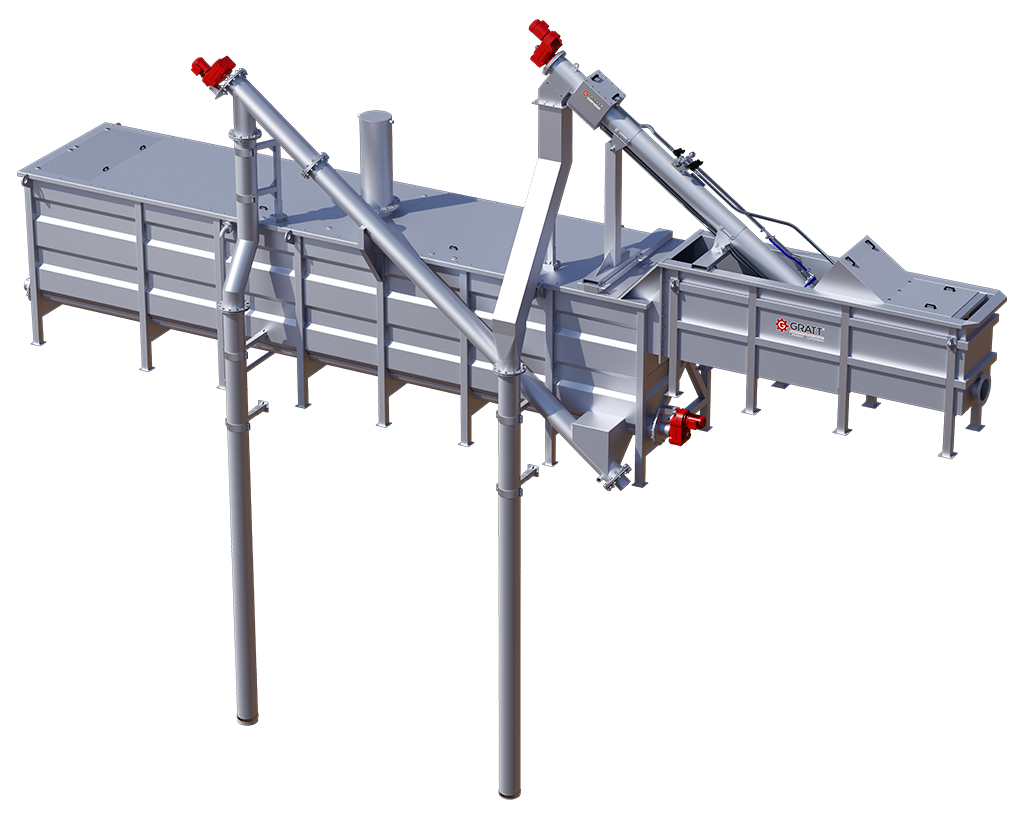
Automation and operation
The Gratt Integrated Preliminary System was developed to require maximum automation and minimum manual intervention.
Among the operational differences:
- automatic activation of conveyors;
- integrated washing and compaction;
- continuous operation;
- low energy consumption;
- easy access for maintenance.
The integration of the steps into a single module significantly reduces the need for auxiliary equipment and simplifies station control.
Advantages of the Gratt Integrated Preliminary System